To counter the impacts of the environmental, social, and democratic crises, the SSE (Social and Solidarity Economy) is already working toward a fairer economy: associations, cooperatives, mutual societies, foundations, and SSE commercial companies are driving or funding projects of general interest, sharing value, or collectively caring for our health.
Since early July, Plateau Urbain has supported and joined the “ESS Marque” (SSE Label). ESS France, the French Chamber of the Social and Solidarity Economy, has launched the “SSE: A Better Economy” brand, aiming to unite, raise the visibility of, and identify SSE actors for the general public.
Founded in 2013 as an association, Plateau Urbain became a Société Coopérative d’Intérêt Collectif (SCIC – Collective Interest Cooperative Society) in 2017. Since its creation, it has hosted SSE organizations in its premises, with 34% of respondents to the large-scale survey of occupants conducted in early 2025 identifying as part of the SSE.
Since 2018, the cooperative has held ESUS (Social Utility Solidarity Enterprise) approval and has worked to uphold the fundamental pillars of the SSE, as formalized by the 2014 SSE Law: a purpose of collective utility, democratic governance, and zero or limited profitability.
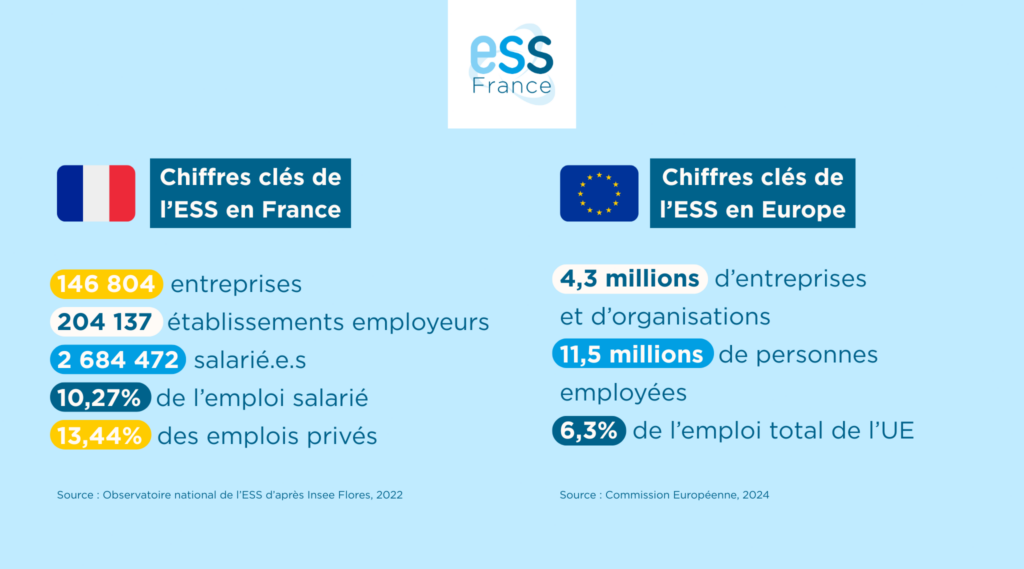
As a reminder, the social and solidarity economy employs 2.7 million people in France and 11.5 million in Europe.
Additionally, the APUR (Atelier Parisien d’Urbanisme – Paris Urban Planning Workshop) recently published its first study on the distribution of SSE establishments in the Grand Paris metropolitan area. Here is the introduction:
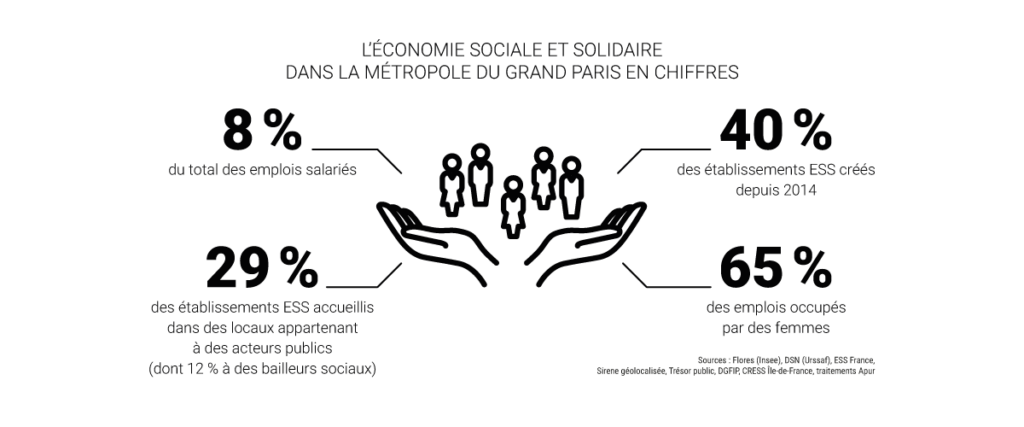
“In the Grand Paris metropolis, the SSE accounts for 7% of establishments and 8% of salaried jobs, with a higher job density than in the Île-de-France region or France as a whole. While Paris is home to over half (56%) of the SSE establishments in the Grand Paris metropolis, these establishments are more evenly distributed across the territory than all businesses combined. Cities like Montreuil, Saint-Denis, Boulogne-Billancourt, Nanterre, and Créteil are significant hubs for SSE activities. The SSE ecosystem in Grand Paris is characterized by a particularly strong presence of associations (over 92% of establishments) and small organizations (85% of establishments employ fewer than 10 people).
Access to affordable, adaptable, and high-quality workspaces is a major challenge for the development and sustainability of SSE activities, especially in the context of high real estate pressure in Grand Paris and other metropolises. The creation of a multi-source, geolocated database of SSE establishments has revealed that while 70% are located in premises owned by private actors, nearly 29% are hosted in spaces or plots owned by public actors, including social housing providers and local authorities.”
Thank you to APUR for highlighting the cooperative’s work (pages 91 and 92) as a solution for hosting SSE activities.
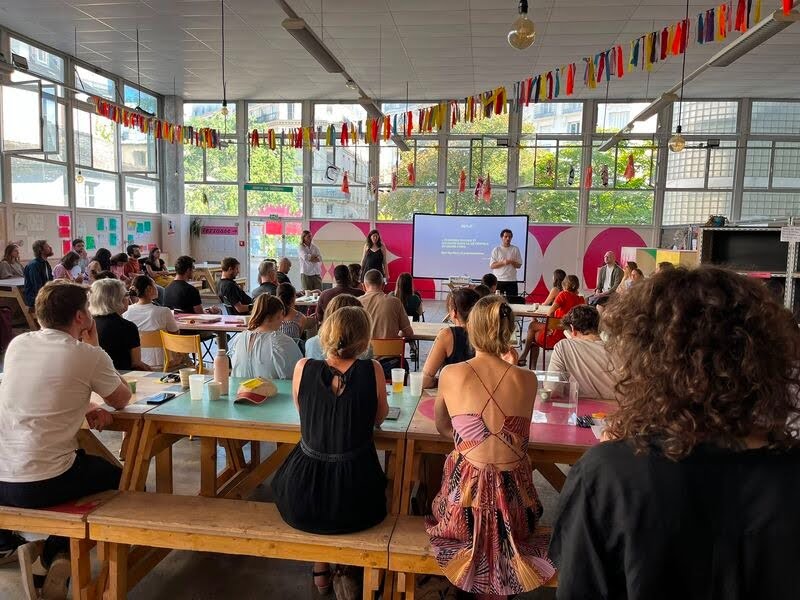
And for presenting its findings during a breakfast event in July at Césure.
To contribute to an economy capable of supporting and facilitating the necessary ecological, social, cultural, and digital transformations, let’s all choose the SSE—whether in our personal purchases (banking, energy, food, fashion, leisure, etc.) or professional choices (service providers, suppliers)!